How Do Answer Engines Like ChatGPT and Perplexity Pick Sources?
TL;DR:
By the time a user finishes typing their question, an AI answer engine has already scanned thousands of sources. Understanding how it works is the difference between your content being quoted to millions or being completely invisible.
What Does 'Picking a Source' Actually Mean for an AI Engine?
When an AI answer engine picks a source, it is selecting a piece of content it considers trustworthy, relevant, and clear enough to base its answer on. For the user, this looks like a cited link or a referenced website. For the content creator, it is free visibility in front of an audience that did not even search for your brand name.
The selection process is not random and it is not purely based on popularity. AI engines evaluate signals that tell them whether a source is authoritative, whether the content directly addresses the query, and whether the information can be extracted cleanly and confidently. Each platform has its own way of doing this.
How ChatGPT Picks Its Sources
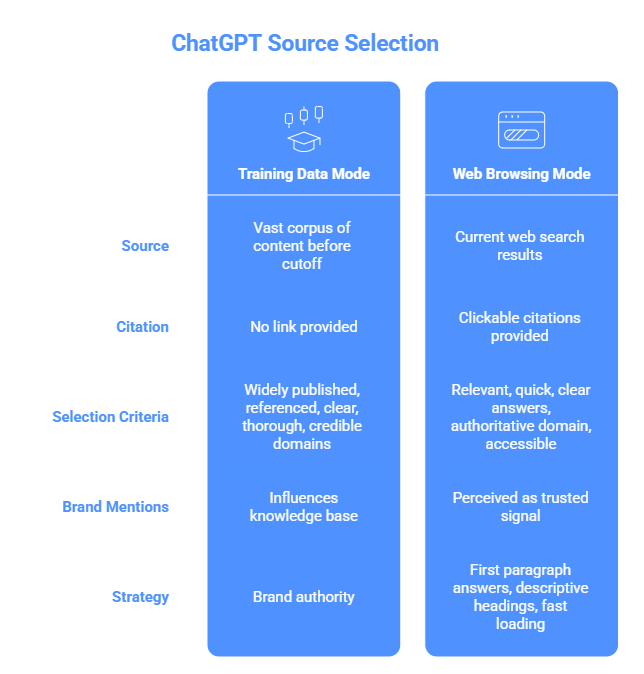
ChatGPT operates in two distinct modes, and understanding the difference is critical for anyone trying to optimise for it.
Mode 1: Responses Based on Training Data
When ChatGPT responds without browsing the web, it draws from the vast corpus of content it was trained on. Your content does not get cited with a link in this mode, but it absolutely influences the answer. Content that shaped ChatGPT's training data tends to share common traits:
- It was widely published and referenced across multiple credible websites.
- It was written in clear, factual, and well-structured language.
- It covered topics thoroughly rather than skimming the surface.
- It came from domains with established credibility and reach.
Mode 2: Responses With Web Browsing Enabled
When ChatGPT browses the web—which is standard in ChatGPT Plus and enterprise versions in 2026—it performs a live search and pulls from current results. In this mode, it functions closer to a traditional search engine, but with an additional layer of AI evaluation on top. ChatGPT with browsing selects sources based on:
- Relevance of the page content to the exact query asked.
- How quickly and clearly the page answers the question.
- The authority and reputation of the domain it is crawling.
- Whether the content is accessible, fast-loading, and not blocked by paywalls.
The Role of Brand Mentions in ChatGPT Source Selection
One factor that sets ChatGPT apart from traditional search engines is how heavily it weighs brand presence across the internet. If your brand, product, or content is referenced frequently by other websites, news outlets, forums, and social platforms, ChatGPT perceives it as a trusted signal. This is sometimes called 'digital PR for AI', and it is one of the most powerful long-term AEO strategies available right now.
How Perplexity AI Picks Its Sources
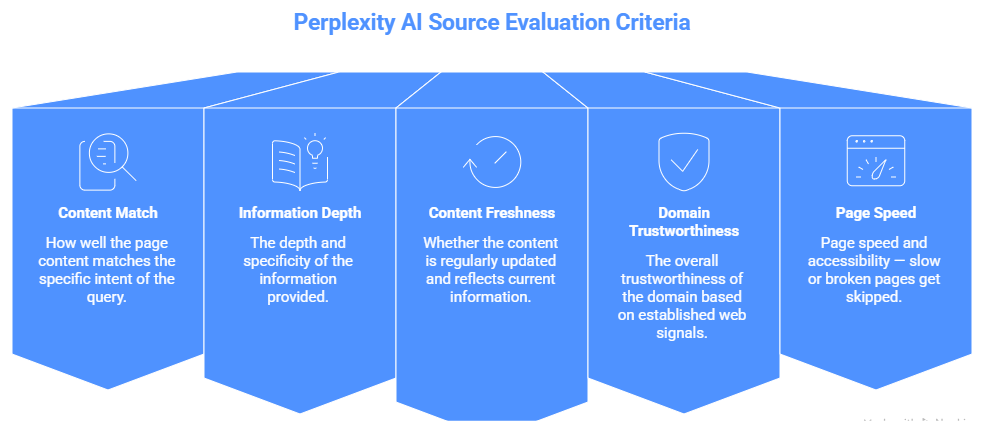
Perplexity AI works differently from ChatGPT in one fundamental way: it always browses the web in real time. Every single query triggers a live search, and every answer it generates comes with visible source citations. This makes Perplexity one of the most transparent and directly impactful AI platforms for content creators.
Real-Time Web Crawling and Source Ranking
Perplexity evaluates sources using the following criteria:
- How well the page content matches the specific intent of the query.
- The depth and specificity of the information provided.
- Whether the content is regularly updated and reflects current information.
- The overall trustworthiness of the domain based on established web signals.
- Page speed and accessibility—slow or broken pages get skipped.
Why Freshness Matters More on Perplexity Than ChatGPT
Because Perplexity crawls the web in real time, it has a strong preference for content that is current. An article updated this month will almost always outrank one that has not been touched in a year. Building a habit of reviewing and refreshing your key content pieces every few months is one of the highest-return activities for Perplexity visibility.
Key Differences: ChatGPT vs. Perplexity Source Selection
Knowledge Base: ChatGPT relies on a combination of pre-trained knowledge and live browsing, which means your long-term brand presence matters. Perplexity is entirely real-time, meaning your content needs to be current and accessible at all times.
Source Curation: ChatGPT tends to surface broader, well-known sources. Perplexity is more democratic, selecting based on the relevance and quality of the content itself, not just the size of the domain.
Traffic Referral: Perplexity delivers more direct and measurable referral traffic because every answer includes clickable source links. ChatGPT visibility is more about influence and brand awareness, especially in its non-browsing mode.
How to Get Your Content Picked as a Source
Whether you are targeting ChatGPT, Perplexity, or both, the following practices consistently improve your chances of being selected as a cited source.
- Answer Directly: Answer the query in your opening paragraph.
- Use Question-Based Headings: Mirror how users phrase their queries.
- Write with Depth: AI engines reward thoroughness over generality.
- Keep Content Updated: Add a visible 'last-updated' date and refresh facts regularly.
- Build Domain Authority: Use quality backlinks and consistent publishing.
- Ensure Technical SEO: Focus on fast load times and clean crawlability.
- Grow Your Brand Footprint: Use mentions, partnerships, and digital PR.
Frequently Asked Questions
Final Thoughts
ChatGPT and Perplexity are not just search tools—they are the new gatekeepers of information. ChatGPT rewards long-term brand presence and content depth. Perplexity rewards freshness, specificity, and real-time accessibility. The brands that understand this now and build their content strategy around it will own the answers that define their industry for years to come.